Stem Cell Advances Reshape Alzheimer’s Research and Treatment
Stem cell therapies and lab-grown brain models are offering new hope in Alzheimer’s research and the search for effective treatments.
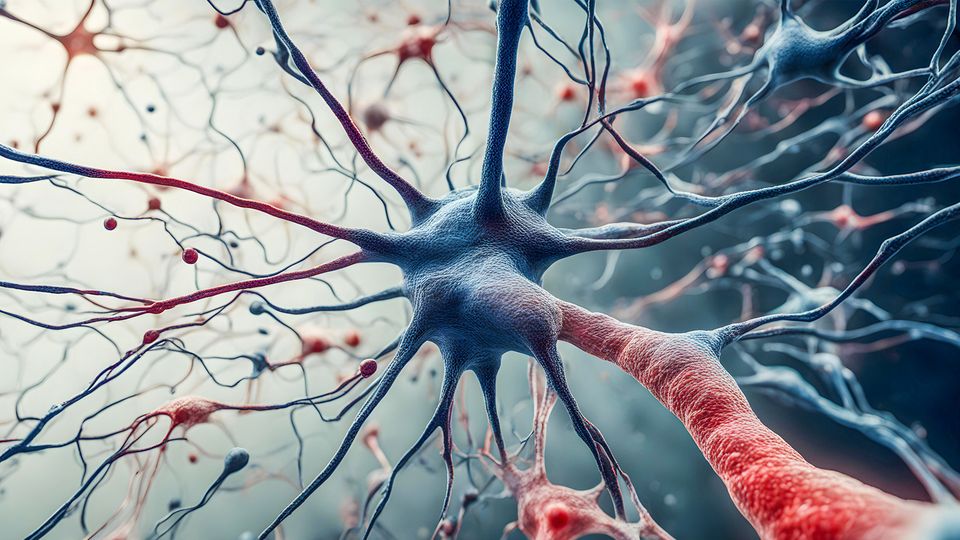
Stem cells hold great promise for researching and treating neurodegenerative diseases. Like blank Scrabble tiles, they have the potential to become any cell in the body. Beyond the hype and danger of unproven and unregulated stem cell treatments, researchers are demonstrating promising stem cell therapy approaches to replace or support dysfunctional neuronal cells, as well as stem cell-based in vitro models to better understand disease mechanisms and drug responses.
The number of people living with neurodegenerative diseases is on the rise. Dementia cases alone are forecast to triple to an estimated 153 million people worldwide by 2050.
The unique ability of stem cells to self-renew and mature into specialized cell types offers the potential to repair or replace damaged neural tissue, tackling the root cause rather than the symptoms. Some stem cell treatments are already clinically approved and established for use in treating other diseases. For example, hematopoietic stem cell treatments – primarily from bone marrow or umbilical cord blood – are used to treat a variety of blood and immune system disorders. The translational journey from the lab to the clinic has been slower for neurodegenerative diseases, and no stem cell therapies have yet completed all phases of clinical trials.
Alzheimer’s disease is caused by the accumulation of misfolded proteins (such as amyloid-beta and tau proteins), leading to widespread damage that affects different cell types in the brain and causes a damaging inflammatory response. In recent years, this has led to a shift in how researchers approach cell therapy for Alzheimer’s disease. From the idea of using stem cells to replace damaged neurons, researchers are now focusing on the supportive role that stem cells can play in the Alzheimer’s brain. Transplanted mesenchymal stem cells (MSCs) have been shown to interact with and help modulate immune cells. A recent Phase 1 human trial demonstrated that MSC therapy reduced inflammation and tissue loss in the brain after a single injection.
Replacing the brain’s support cells
In another active area of research, scientists are investigating the use of microglial cells – specialized immune cells in the brain – to re-engineer the brain’s immune cells. The role of microglia in the Alzheimer’s brain is complex and not fully understood, with evidence suggesting that they have both protective and harmful roles, depending on their state of activation.
“The best place to start is always genetics, and that’s where these microglia cells really came into the spotlight,” explained Wernig. “Mutations were found in genes that would either cause a rapid hereditary early onset neurodegenerative disease, or that were associated with Alzheimer’s disease, and those genes were only expressed in microglial cells in the brain. That was a total surprise.”
As a result of these findings, Wernig and his group at Stanford have been developing a cell therapy approach to replace dysfunctional microglia to help restore brain function.
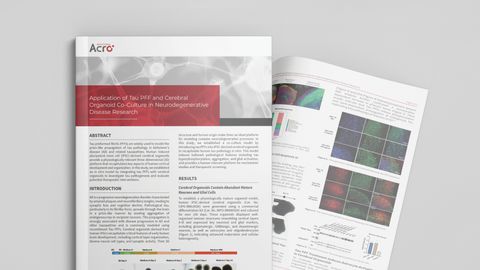
Modeling Tau Pathology With Human Brain Organoids
Discover a 3D organoid model that supports therapeutic screening in a human-relevant setting.View Application Note
“The main problem that we have been facing is that most cell types that you inject into the brain stay very localized. They stay exactly where you put them, and they don’t really replace anything in the brain; they act more like another hard drive for a computer,” Wernig explained. “What we want is to get rid of the old dysfunctional cells and replace those with healthy, maybe even supercharged microglia cells”.
Using TREM2-deficient mouse models, the team used a small-molecule drug to deplete the native microglia cells. They then injected hematopoietic stem cells into the mice's bloodstream. In results reported in Cell Stem Cell, the researchers found that the new cells integrated into the mouse brains, effectively replacing the native microglia.
One of the challenges the researchers are now facing is that the cell replacement treatment requires a toxic preconditioning treatment to deplete the native microglial cells – something that wouldn’t be suitable for a typical elderly Alzheimer’s patient. In recent, unpublished research, Wernig’s group has been developing a milder preconditioning treatment. The researchers used a combined approach, first treating the cells with a US Food and Drug Administration (FDA)-approved drug to increase their sensitivity to irradiation and then irradiating the head. This meant that a much lower and less toxic dose of irradiation was required, and the head-restricted incorporation of new cells avoided the issue of graft-versus-host disease. Promisingly, this approach could also be used for other bone marrow transplant treatments currently in clinical use.

Building brains to model Alzheimer’s
One of the biggest challenges in developing stem cell therapies for neurodegenerative disease is the so-called “translation gap”, where treatments that appear successful in mice often fail to deliver similar results in humans, leading to a high drop-off of promising therapies in early clinical trials.
Dr. Ranjie Xu, assistant professor in the Department of Basic Medical Sciences at the University of Purdue, is exploring ways to create more human-relevant models by developing lab-grown “mini-brains”, otherwise known as brain organoids. These are grown from human-derived stem cells and develop into 3D structures that mimic certain features of brain tissue, which allows researchers to investigate disease mechanisms and test potential drugs.
These 3D structures are typically made from patient-specific induced pluripotent stem cells (iPSCs), meaning that organoids can be created from patient cell lines with specific forms of Alzheimer’s disease. Currently, most Alzheimer’s models have used cells from patients with familial forms of Alzheimer’s disease, where specific genetic mutations drive the disease onset. However, 95% of all Alzheimer’s cases are caused by so-called sporadic Alzheimer’s disease (also known as late-onset Alzheimer’s), which occurs because of a complex interplay of genetic and environmental factors rather than a single inherited gene.7
Xu’s team have been developing organoid models for the sporadic form of Alzheimer’s and have recently published a paper in Nature Molecular Psychiatry.
Advancing Neurodegenerative Disease Research With iPSCs
This eBook explores the latest advances in iPSC-derived models, highlighting how they bridge preclinical and clinical research to accelerate discovery in neurodegenerative disease research.View eBook
Historically, it's been shown that some individuals who received pituitary growth hormone as a medical treatment from cadavers in childhood later went on to develop Alzheimer's. A correlation was later found with these patients and cadavers that had high quantities of the misfolded proteins typically seen in the Alzheimer’s brain. This suggested that the protein misfolding could be transmissible, similar to prion diseases.
The team then tested the Alzheimer’s model with lecanemab, an FDA-approved Alzheimer’s drug, and it responded exactly as expected. The amyloid plaques caused by misfolding were reduced after treatment, and interestingly, the organoids also mimicked some of the adverse side effects commonly seen in human patients by showing an inflammatory response.
This is exciting progress in the field, but one of the major challenges still faced is creating organoids that can also mimic the ageing brain.
“While in vitro models are valuable, they sometimes fail to capture the mature or ageing state of the human brain,” explained Xu. “To address this limitation, we are working on developing in vivo models by transplanting iPSC-derived neuronal progenitor cells into the brains of neonatal mice.”
Preliminary data from this work indicate that the mouse brain environment promotes the ageing of human neural cells. The team is also exploring the idea of transplanting whole organoids into mouse brains to retain the 3D structure of the human-derived organoid. Xu is hopeful that these models will help to mimic the cell interactions in the ageing brain in the context of Alzheimer’s disease.
The future of stem cell therapies for Alzheimer's disease
Researchers are also turning to artificial intelligence (AI) and machine learning as essential tools to help accelerate research for Alzheimer’s disease. AI excels at analysing large, complex datasets and extracting meaningful information. This has enormous potential to reveal subtle patterns or genetic variants that could enable clinicians to intervene before Alzheimer’s disease symptoms emerge. AI is also being integrated more into the research pipeline, helping to reveal previously unknown risk factors that could contribute to disease onset.
Huge advancements in the field mean that the decades-long promise of stem cell treatments for neurodegenerative diseases is inching closer to reality. The brain is the most complex organ in the body, and Alzheimer’s disease is still not fully understood. Yet, human-relevant organoid models are accelerating understanding of the disease, and new approaches in stem cell-based therapies are showing promising results in preclinical and early clinical trials. It is still a waiting game, and there will be no overnight solution, but researchers are confident that this is just a matter of time. “We will have some very exciting progress in the next 10 years,” concluded Xu.