Unlocking the Human Disease Blood Atlas: Mapping 5400 Proteins Across 59 Conditions
Scientists have built the first human blood atlas, revealing unique protein fingerprints across 59 diseases.
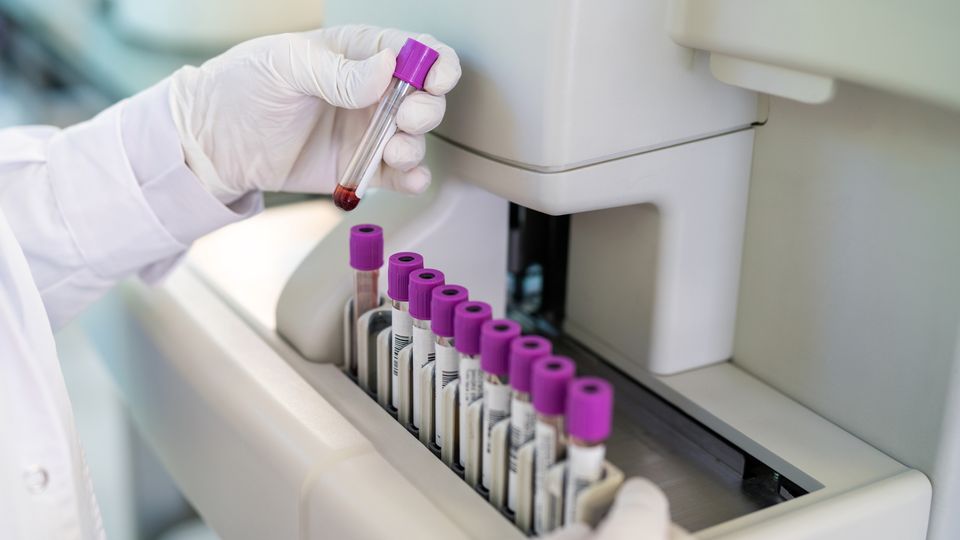
For decades, scientists have hunted for disease biomarkers one at a time, but a new study looks at all proteins in blood at once. Scientists at the Human Protein Atlas built a human pan-disease blood atlas, revealing distinct protein fingerprints for each condition.
The vision behind the human disease blood atlas
Nearly ten years ago, Dr. Mathias Uhlén, director of the Human Protein Atlas and a senior professor of microbiology, predicted that the next big leap in understanding disease would come from viewing the body’s proteins as one interconnected system.
“The next phase to understand human biology and disease is to understand, in a more holistic way, all the proteins in the human body,” said Uhlén in a 2017 interview with HUPO.
He went further, offering advice to aspiring scientists: “I would advise young people today, who are interested in life sciences, to move in to this new era of protein research, where you can use all these new tools to actually look, in a technology and data-driven way, at the proteins and then characterize them, and actually in the end that will benefit mankind.”
Today, he and his collaborators have done exactly that.
In precision medicine, early and accurate disease detection requires biomarkers that are measurable in simple, non-invasive samples, such as blood.
Many past biomarker efforts only compare patients with healthy controls, one disease at a time. That approach often fails when markers turn out to reflect general inflammation or tissue injury rather than the disease itself.
Until now, few studies have systematically compared many diseases side-by-side in one unified dataset to distinguish shared inflammation from truly disease-specific signals.
To test this idea, the team built one of the largest datasets ever assembled for blood proteomics, involving an international team of over 100 researchers. They created a human pan‑disease blood atlas of the circulating proteome, mapping thousands of proteins in blood that vary across 59 diseases, profiling over 8000 individuals.
Identifying blood biomarkers
Using next-generation proximity extension assay technology, the team measured ~5,400 proteins in 8,262 individuals, including healthy volunteers tracked over time, and patients across 7 disease categories – from cancer and cardiovascular disease to autoimmunity, infection and metabolic disorders.
Proximity extension assay
A highly sensitive technology that uses pairs of DNA-labeled antibodies to detect and quantify proteins in blood, allowing thousands of proteins to be measured simultaneously.
Once the data were assembled, the team used AI models to separate shared biological noise from true disease-specific signals.
With that level of detail, new patterns began to appear. Each condition produced a distinct “protein fingerprint” in blood.
As Uhlén explained, “using AI models, many diseases have clear protein-significant blood ‘fingerprints’, including many of the cancers, but there are also some shared profiles, such as liver cancer and other liver-associated diseases.”
This side-by-side view allowed the team to see where disease pathways intersected and where they truly diverged.
AI-Enabled Imaging Solutions for Complex 3D Organoid Screening
This application note demonstrates how next-generation confocal imaging technology combined with AI-powered analysis tools enables researchers to capture high-quality images from 3D organoids.View App Note / Case Study
Beyond disease, the team asked what “normal” looks like. Over two years, they saw that healthy participants maintained a stable blood-protein profile, which Uhlén and the team called a “molecular fingerprint of wellness”.
The same tools also revealed how the proteome changes through life.
“The study shows the dramatic changes going on during puberty and emphasizes the different paths taken by males and females,” Uhlén added.
The study also identified early protein changes for cancers such as lung and ovarian, suggesting the potential for detection years before symptoms appear.
Using the blood proteome as a reference for precision medicine
By creating a single, open-access map of the blood proteome, Uhlén and his colleagues have built a resource that anyone can explore – a reference for studying disease biology and designing better diagnostics.
“The important conclusion is that inflammation markers are often not good biomarkers for specific diseases, but instead are good general disease biomarkers,” said Uhlén.
That distinction, now made clear by the pan-disease view, could impact how researchers interpret thousands of biomarker studies published each year.
Regular blood profiling could also become a new health check, tracking the molecular shifts that precede disease.

Will AI Transform the Way We Edit Genes?
In this webinar, our experts will showcase how AI-engineered base editors are achieving unprecedented precision and efficiency in therapeutic development.View Webinar
“A vision would be to take a blood profile every year and use the molecular profile to probe your health and your biological age. Your own profile might be used as your own control,” said Uhlén. Such approaches could help detect cancers earlier, guide treatment choices and monitor therapy response in real time.
Still, clinical translation will take patience. “The new next-generation blood profiling used in the study is a revolution for the development of blood profiling assays, but to reach general clinical routine, the profiles must be validated in dedicated clinical settings and pass rigorous regulatory paths. This takes at least five years,” he said.
Even with those challenges, Uhlén remains optimistic.
“These powerful new technologies allow us to move into a new era of precision medicine with the aim of early detection before symptoms, stratification of patients for effective treatment and allow monitoring of treatment to help clinicians know if the selected treatment is effective,” said Uhlén.
Reference: Álvez MB, Bergström S, Kenrick J, et al. A human pan-disease blood atlas of the circulating proteome. Science. 0(0):eadx2678. doi: 10.1126/science.adx2678
About the interviewee:
Dr. Mathias Uhlen research is focused on protein science, antibody engineering and precision medicine and ranges from basic research to applied research, including innovations such as antibody purification (MabSelect SuRe), magnetic beads (Dynal), next generation sequencing (Pyrosequencing), protein scaffolds (Affibody), antibody-based proteomics (Atlas Antibodies), AI-based drug development (ScandiBio Therapeutics) and MS-based targeted proteomics (ProteomEdge).
Since 2003, he leads the Human Protein Atlas program. His research has resulted in 900+ publications and 120,000+ citations (h-index 146) according to Google Scholar. He is co-founder of 20+ biotech companies. He is member of the National Academy of Engineering (NAE) in USA, the Royal Swedish Academy of Science (KVA), the Swedish Academy of Engineering Science (IVA) and the European Molecular Biology Organization (EMBO). He was the Founding Director of the Science for Life Laboratory (SciLifeLab), a Swedish national infrastructure for molecular bioscience.